The Early Days
Can you imagine a time before profile pictures? The evolution of digital identity started in the early 2000s, when your online presence was typically represented by a pixel icon, a cartoon character, or a preset avatar — not a real photo. This was the age of anonymity online, where what you looked like mattered less than what you chose to represent yourself. For example, QQ users in China carefully selected from a library of preset icons, with over 200 million active users customizing their virtual identities by 2005. This created one of the earliest large-scale avatar cultures in the world, where each choice communicated something about your personality without revealing your actual appearance.
Meanwhile, forums and early social networks like MySpace gave users the freedom to upload custom images. However, due to low resolution and slow internet speeds, most profile pictures were grainy, compressed, and barely recognizable by modern standards. The concept of a high-quality, polished online identity simply did not exist yet — but that was about to change.
The Selfie Era
The early avatar era came to an abrupt end when smartphone cameras put a high-quality camera in every pocket. When Apple introduced the iPhone 4 with its front-facing camera in 2010, it sparked a cultural revolution. Therefore, the selfie became the definitive form of online self-presentation. Apps like Meitu秀秀 and Instagram popularized beauty filters and retouching tools, creating a completely new standard for profile pictures.
By the mid-2010s, a heavily filtered, carefully angled selfie had become the default profile picture across most social platforms. The expectation shifted from anonymity to authenticity — or at least, the appearance of authenticity. In fact, a 2015 study found that profile pictures with filtered photos received 21% more views than unfiltered ones, proving that visual polish had become a form of social currency. But as filters became more sophisticated, a natural question emerged: what if you could transform your photo entirely, rather than just tweak it?
The AI Revolution
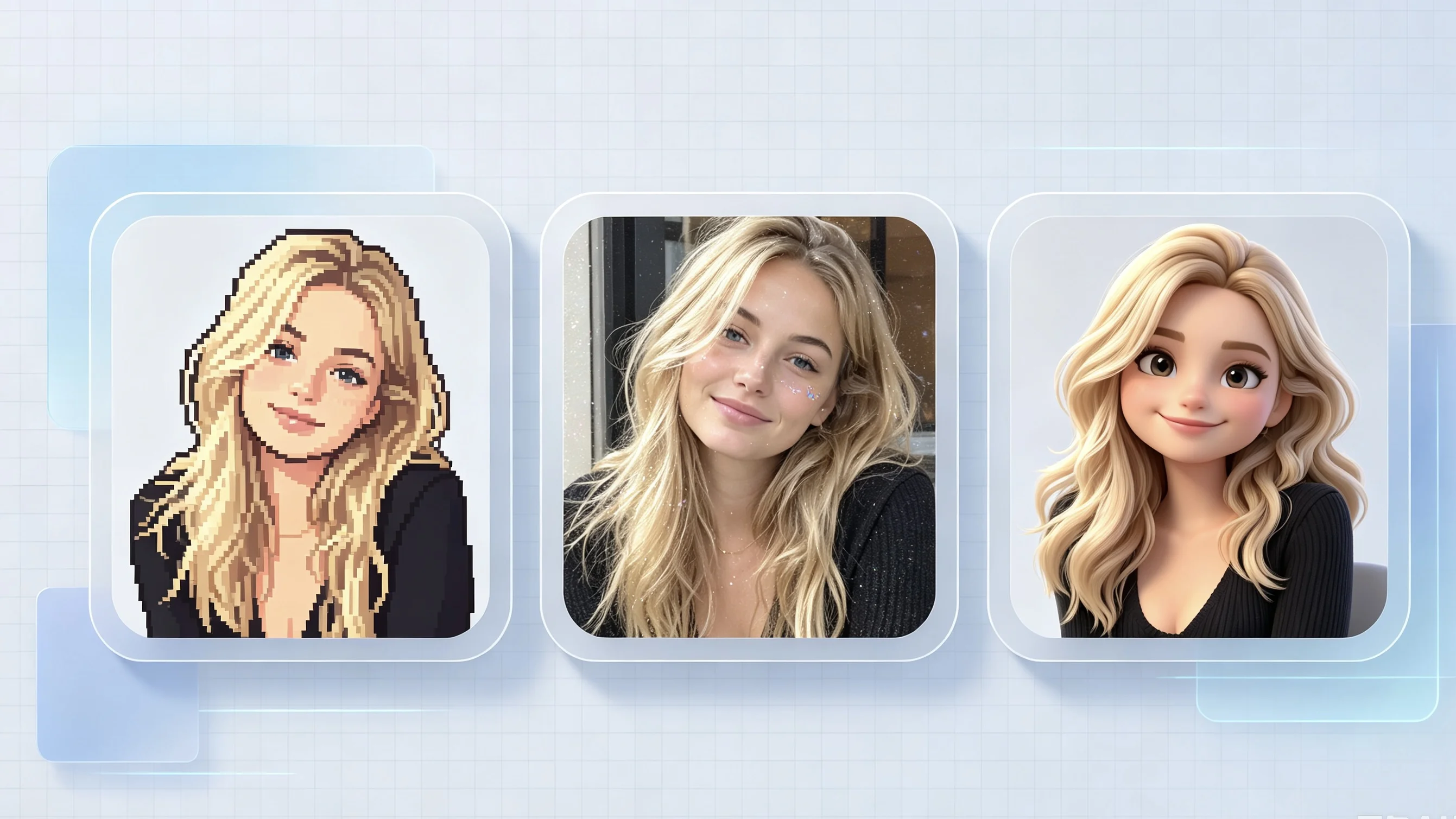
The answer came with the rise of AI-powered style transfer technology. What began as novelty apps that turned your photo into cartoon characters quickly evolved into sophisticated technology capable of reimagining your portrait in any artistic style — from Renaissance oil painting to futuristic cyberpunk. The journey from pixel icons to AI-generated portraits can be mapped across four distinct eras:
| Era | Technology | Avatar Style | Key Development |
|---|---|---|---|
| Early Internet | Preset icons, Basic photo upload | Pixel art, Cartoon characters | QQ profile system, MySpace custom uploads |
| Selfie Era | Smartphone cameras, Beauty filters | Heavily filtered selfies | iPhone 4 front camera, Meitu秀秀, Instagram |
| AI Revolution | AI style transfer, Diffusion models | AI stylized portraits | Midjourney, DALL-E, Bobi 32 styles |
| Future | Real-time AI, AR integration | Dynamic, context-aware avatars | Cross-platform AI identity management |
Today, AI stylized portraits represent a sweet spot between the anonymity of early internet avatars and the raw authenticity of unfiltered selfies. They are recognizably you, but in a version that reflects your aesthetic choices. For instance, Bobi offers 32 distinct styles — from classical oil painting to futuristic cyberpunk — all generated from a single uploaded photo. According to a 2025 market report, the AI image generation market is projected to reach $5.3 billion by 2030, highlighting the growing demand for AI-powered visual identity tools.
Platform Cultures
Just as profile pictures have evolved over time, they also vary dramatically across platforms. Each digital space has developed its own avatar culture, with distinct expectations for what looks appropriate and appealing. Understanding these unwritten rules is essential for choosing the right style for each platform.
- LinkedIn: Professional oil painting or ink wash styles — polish and authority are rewarded.
- Instagram: Creative, eye-catching styles like cyber neon or cel shading — visual appeal drives engagement.
- Discord / Gaming: Fantasy-driven styles like cyberpunk or anime — self-expression and community belonging matter most.
- WeChat / WhatsApp: Warm, approachable styles like watercolor or 3D soft — trust and familiarity are key.
- Behance / Dribbble: Custom prompt styles that showcase artistic taste — originality signals creative credibility.
A stylized portrait that generates engagement on TikTok might feel out of place on a corporate networking site, and vice versa. Therefore, the smartest strategy is not to choose one avatar for all platforms, but to match the style to the culture of each platform.
What Comes Next
As AI technology continues to advance at an extraordinary pace, the line between a captured photograph and a generated portrait will blur further. Within the next decade, dynamic avatars may become the norm — profiles that adapt their style based on context, platform, or even the viewer. Imagine logging into LinkedIn and seeing your professional oil painting avatar, then switching to Instagram where the same AI presents a creative cel-shaded version of you. For example, your profile picture could appear professional on LinkedIn, creative on Instagram, and playful on gaming platforms — all managed through a single AI-powered system working seamlessly in the background.
Bobi is already making this future accessible. Upload one photo and generate 32 stylized versions, each platform-ready and uniquely you. The key takeaway is clear: the evolution of profile pictures is not just about technology — it is about how we choose to present ourselves in an increasingly visual digital world.
Frequently Asked Questions
Will AI avatars eventually replace selfies entirely?
Not entirely, but they will become a mainstream alternative. Selfies offer authenticity and real-time expression, while AI avatars provide polish and creative control. The two formats are likely to coexist, each serving different contexts and platforms.
Which platform pioneered the custom avatar trend?
QQ was one of the earliest platforms to build a large-scale avatar culture, with over 200 million users customizing pixel icons by 2005. MySpace later popularized the concept of personalized profile pictures, paving the way for modern AI-powered avatar generation.
How did photo editing apps change profile picture culture?
Apps like Meitu秀秀 and Instagram made high-quality filters accessible to everyone, shifting the expectation from anonymous icons to polished, aesthetically pleasing selfies. This laid the groundwork for the AI avatar revolution by normalizing the idea of digitally enhanced portraits.
Does the style of my profile picture really affect how people perceive me?
Yes, research shows it does. According to the Digital Identity Institute, 67% of users choose avatar styles based on emotional perception rather than aesthetics alone. Your avatar style communicates personality before you say a word.